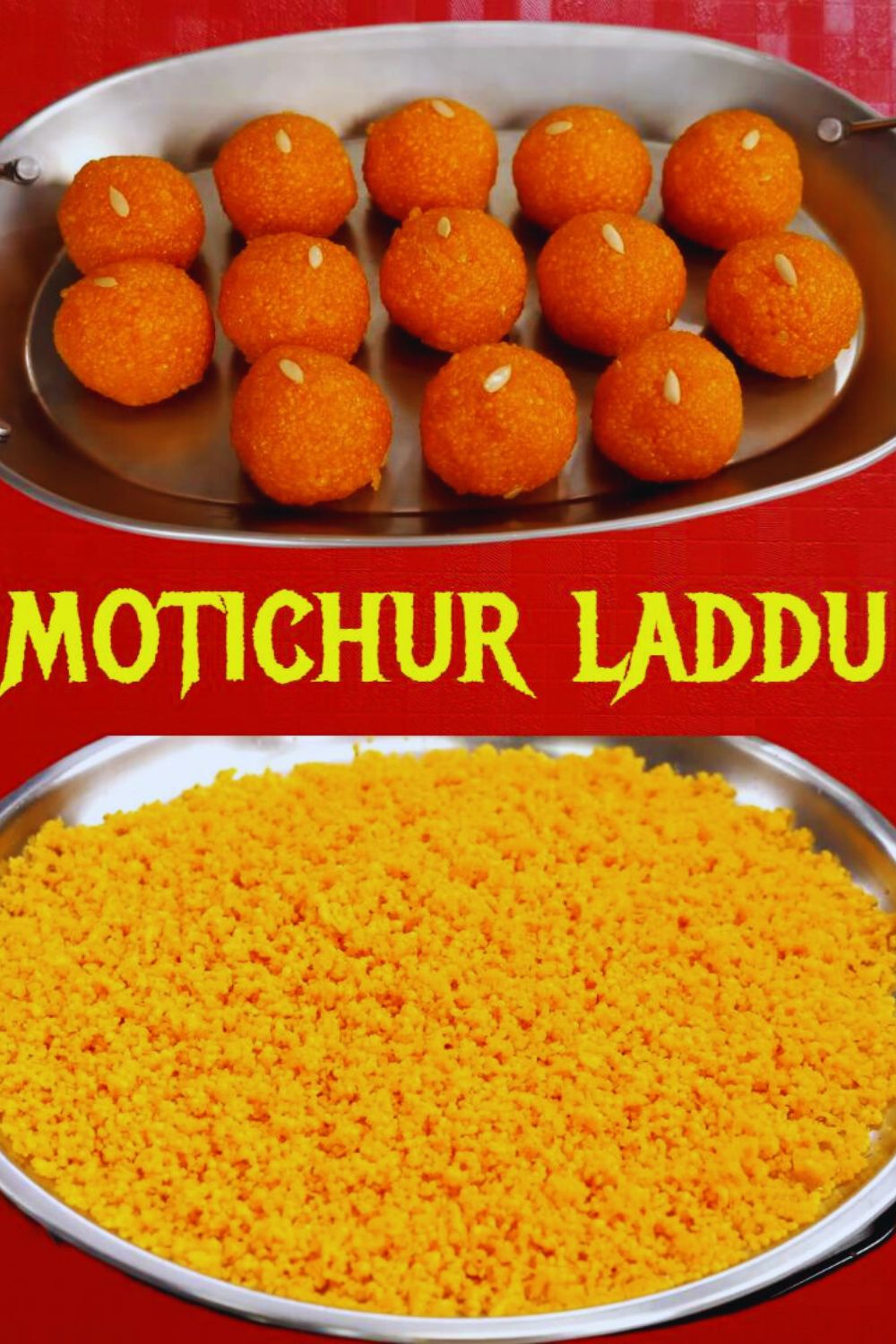
Motichur laddu comprises boondis made of besan and mixed with a sweet and tasty sugar syrup. The steps to make motichur laddu at home are elaborate but simple. Follow my recipe to learn them.
KEY TAKEAWAYS
- Motichur laddu is a very common and traditional Indian sweet dish.
- Enjoy it as it is or serve it with puris or in festive thalis.
- Motichur laddu tastes soft, sweet, and slightly grainy with a rich aroma of ghee.
- Other similar recipes are besan laddu, boondi laddu, rava laddu, and coconut laddu.
The Ingredients:
To make the boondi (moti):
- 1 cup besan (gram flour)
- 2 drops food color (kesar yellow, optional)
- 1 cup water
- Ghee (clarified butter) as required to fry
For the sugar syrup (chashni):
- 1 cup sugar
- ½ cup water
- 2 drops food color (kesar yellow)
- ½ tsp rose water
- 1 tsp liquid glucose (or 2 tbsp honey)
- 1 tbsp magaz (melon seeds)

I came across this recipe from the florist who visits during festive seasons. She once handed me a little box as a Diwali gift. Inside were these delicious homemade Motichur laddus. I called her immediately and asked for the recipe. She was thrilled and explained it joyfully.
I made it the next morning. My husband found it fragrant and light, and my boys said it was “Flower Aunty’s flavor.” Now, it is our floral-festival food. That act reminded me that people who deliver beauty for rituals also know how to cook with heart—one garland, one recipe at a time.
How to Make Motichur Laddu? (Step by Step Guide with Images)
Step 1: Take 1 cup of besan (gram flour) in a mixing bowl and add 2 drops of food color (kesar yellow). Mix them.
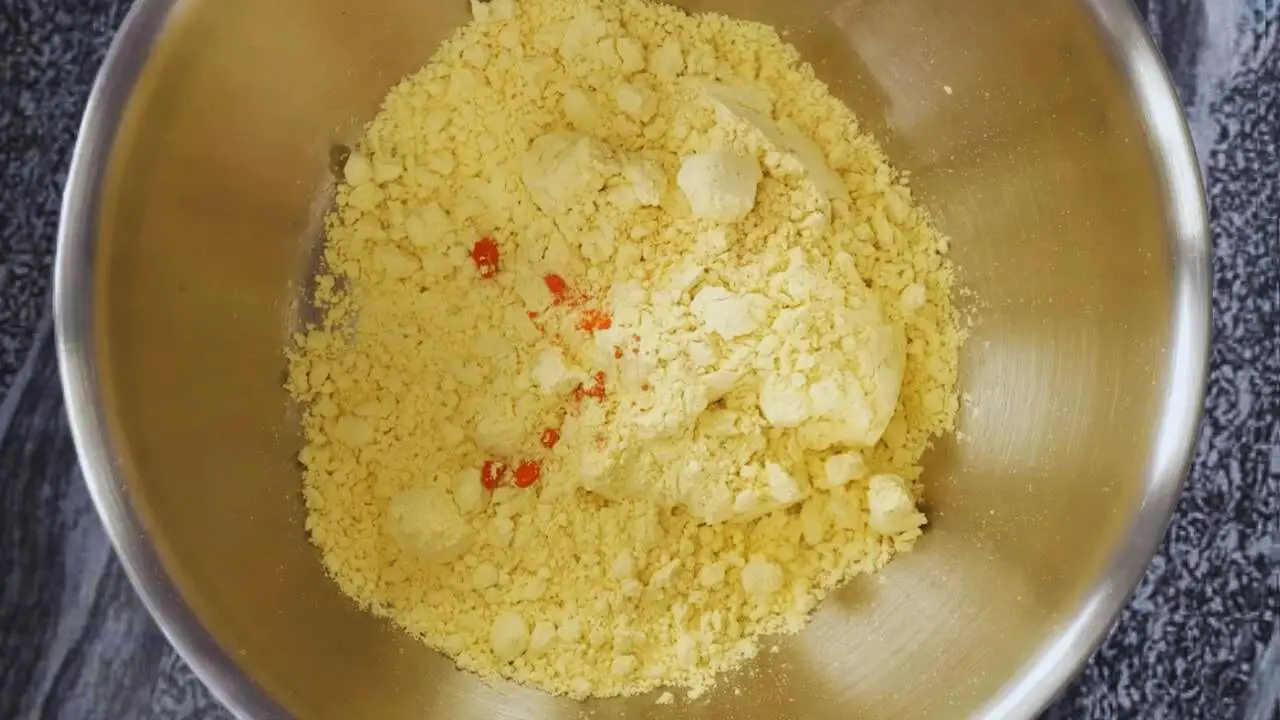
(Pro tip: Do not use Bombay besan or any fine besan to make motichur laddu. The moti or boondi will not be of uniform shape).
Step 2: Then, add water gradually and mix it nicely to make a smooth and free-flowing paste.

(Pro tip: If the besan paste is not free-flowing, the boondis will not be round and of uniform shape).
Step 3: Now, heat an adequate amount of ghee (clarified butter) in a deep-bottom kadai to fry the boondi. It should be half filled with ghee. Heat it on a high flame.
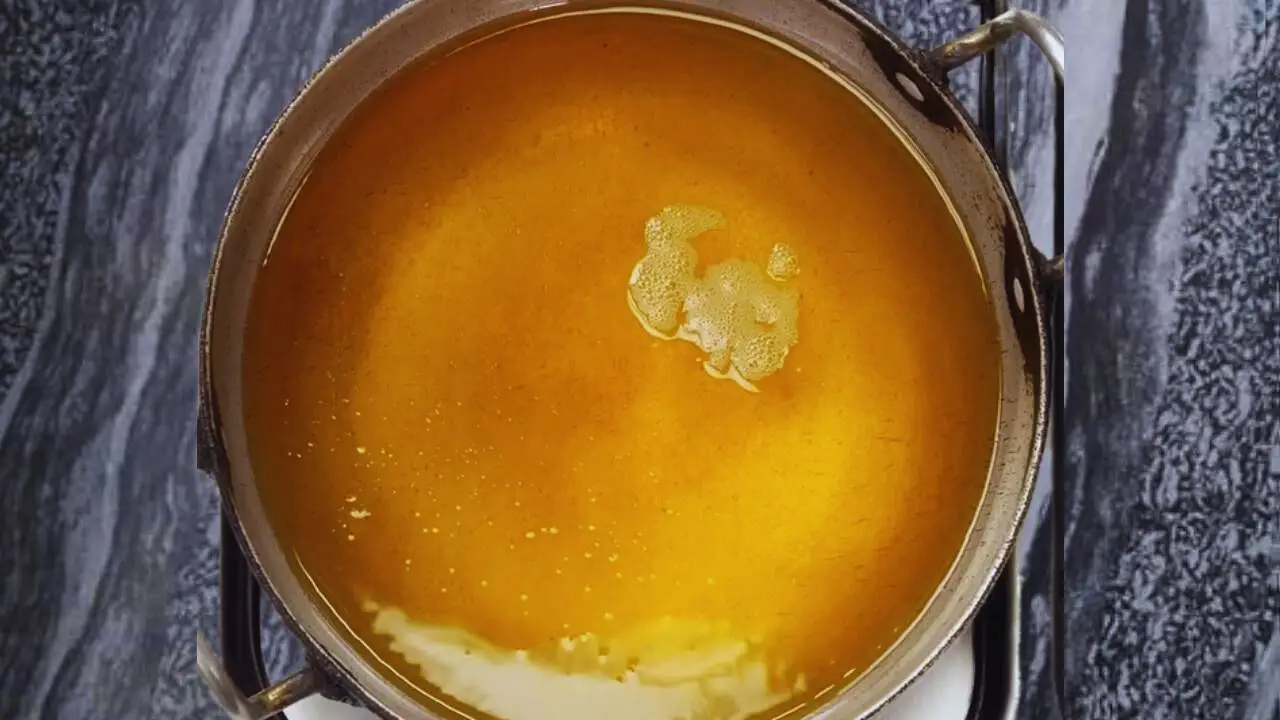
(Pro tip: It is easier to make boondi in a deep-bottom kadai than a frying pan).
Step 4: In the meantime, make a platform to tap the skimmer or perforated ladle (jhara), ensuring a gap of at least 3 to 4 inches between the oil and the ladle.
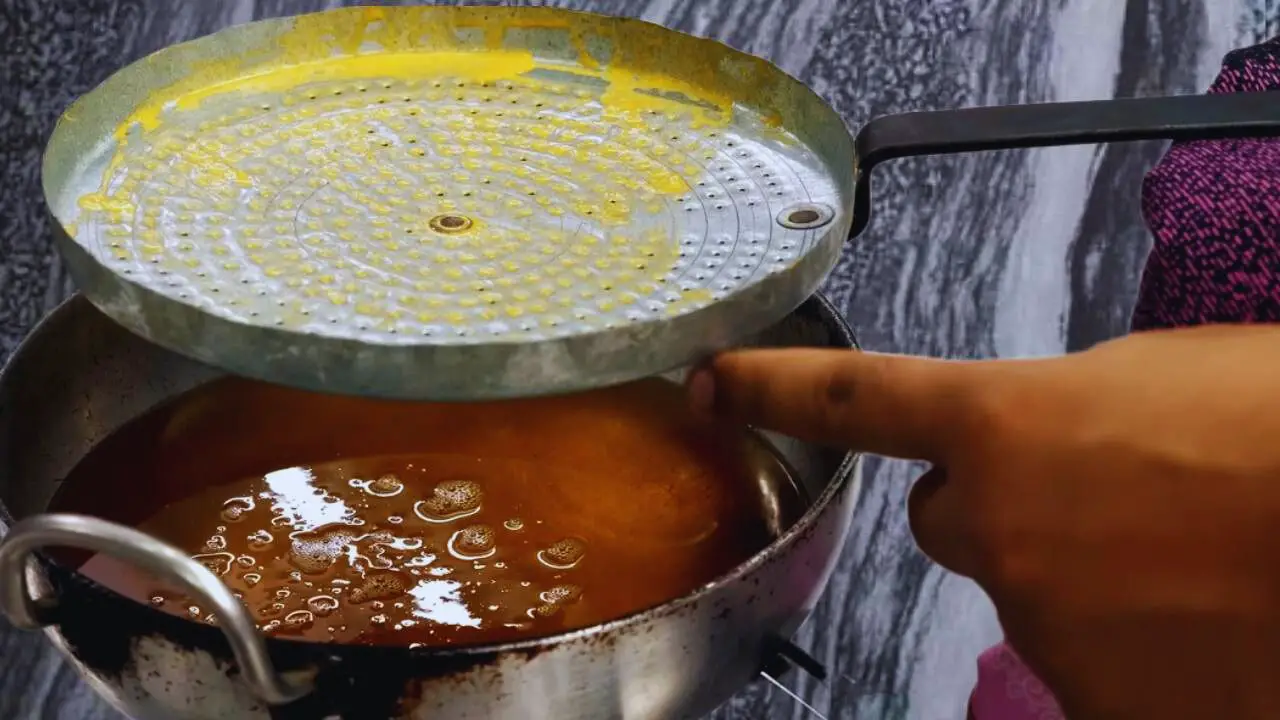
(Pro tip: For easy and safe tapping and to ensure that there is a gap of at least 3 to 4 inches between the oil and the perforated ladle, use a steel container larger in height than the kadai. You may cover it with a towel if you do not like the continuous sound of metal while tapping).
Step 5: Now, take a clean jhara and place it on the platform so that the ladle is on top of the hot ghee. Position the platform perfectly.

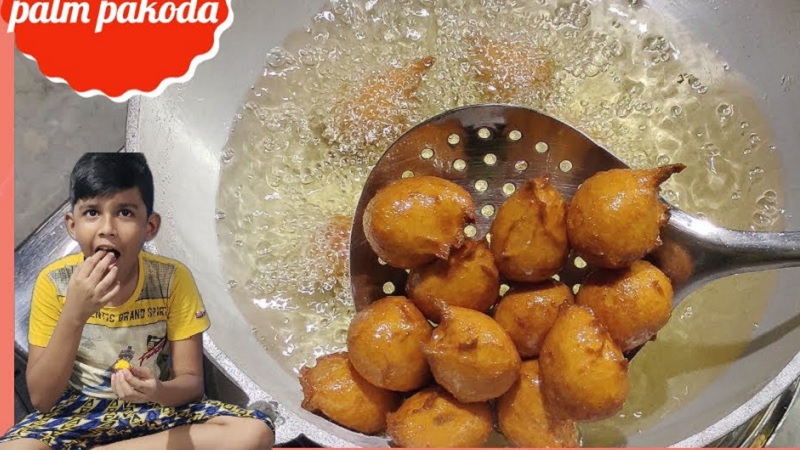
Step 6: Put a little bit of the besan mixture (about 1 to 1.5 ladles) and start tapping immediately. The boondis will not take time to fry. When the foam subsides, remove them and put them on a large plate as shown in the image below. Repeat the process to fry the entire besan mixture. Spread them and keep them aside to cool down.
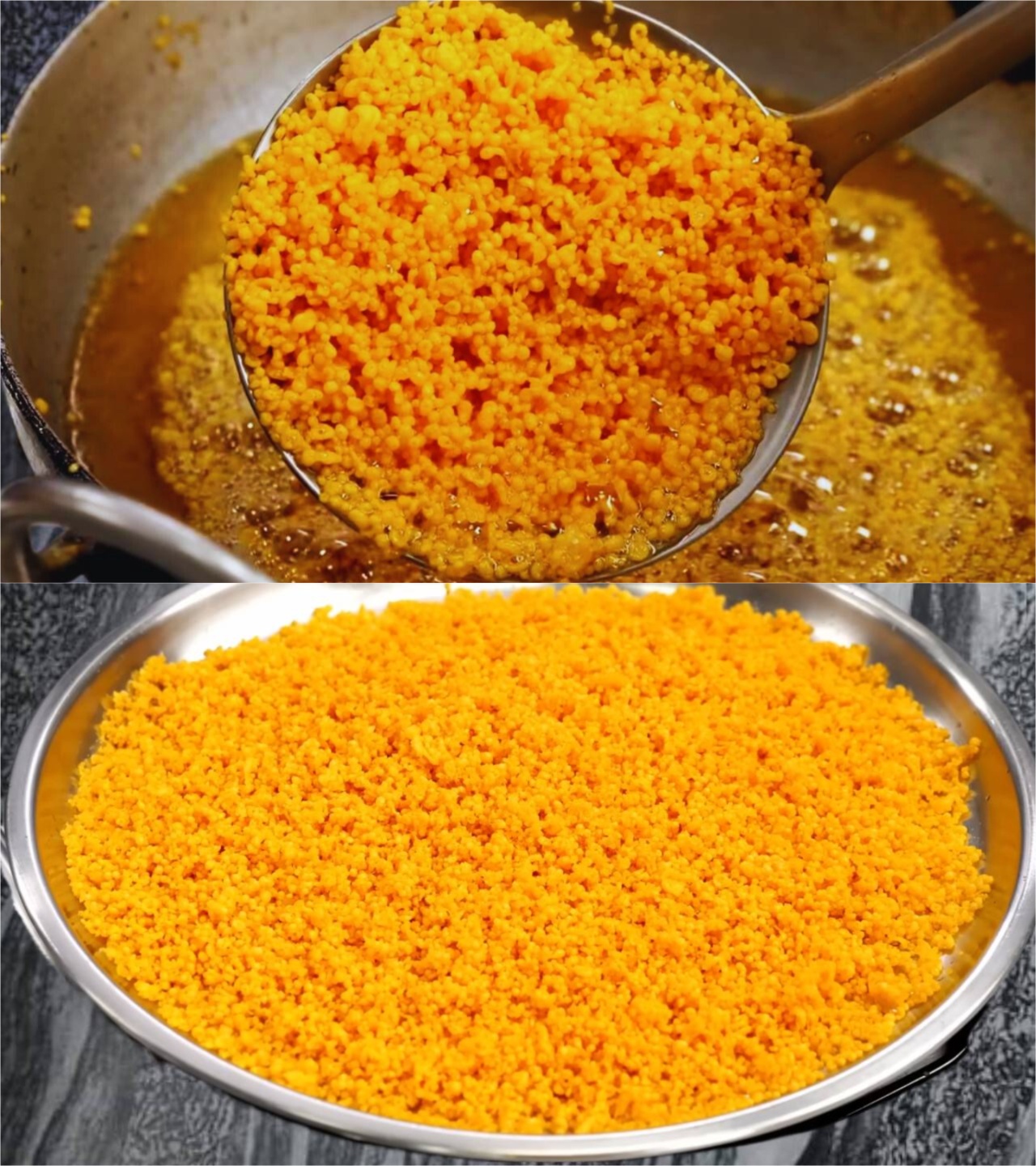
(Pro tip: Fry boondis in small batches for uniform shape. Also, clean the skimmer inside out every time to ensure a perfect round shape. It may be difficult for you alone to put the besan mixture and tap and clean the ladle at the same time. Take help from another person if required. Do not put any wire net or tissue paper on the plate. Do not worry if a little bit of ghee comes with the boondis. It will enhance the taste and flavor of the laddus).
Step 7: In the meantime, take 1 cup of sugar and ½ cup of water in a separate kadai. Add 2 drops of food color (kesar yellow), ½ tsp of rose water, and 1 tsp of liquid glucose to it. Stir it continuously and heat it on a medium flame until it starts boiling and the sugar melts.
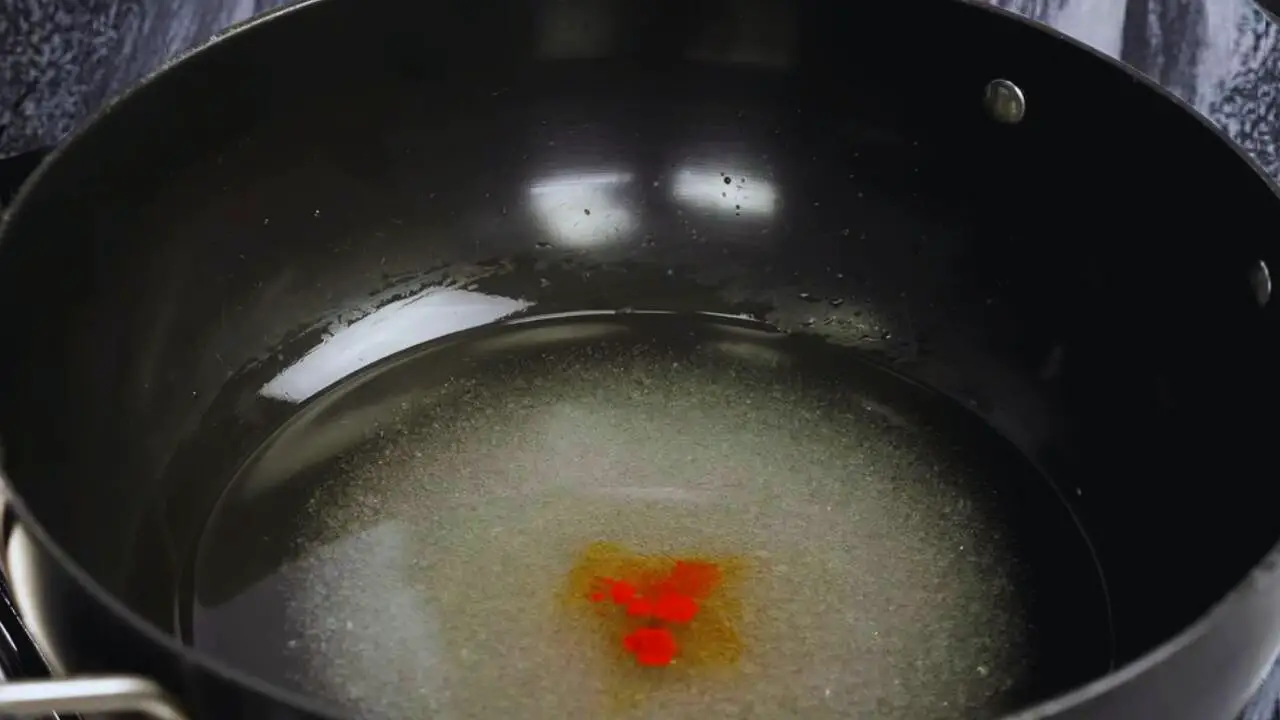
(Pro tip: The transparent liquid glucose promotes binding and prevents the sugar syrup from crystallizing. If you do not have liquid glucose, you can use honey instead, but not now).
Step 8: When the sugar melts, switch off the flame of your gas stove and put all the boondis quickly in it and start stirring.

Step 9: Now, switch on the flame and stir continuously until the sugar syrup is completely absorbed by the boondis. At this stage, add 2 tbsp of honey to it and mix it nicely.
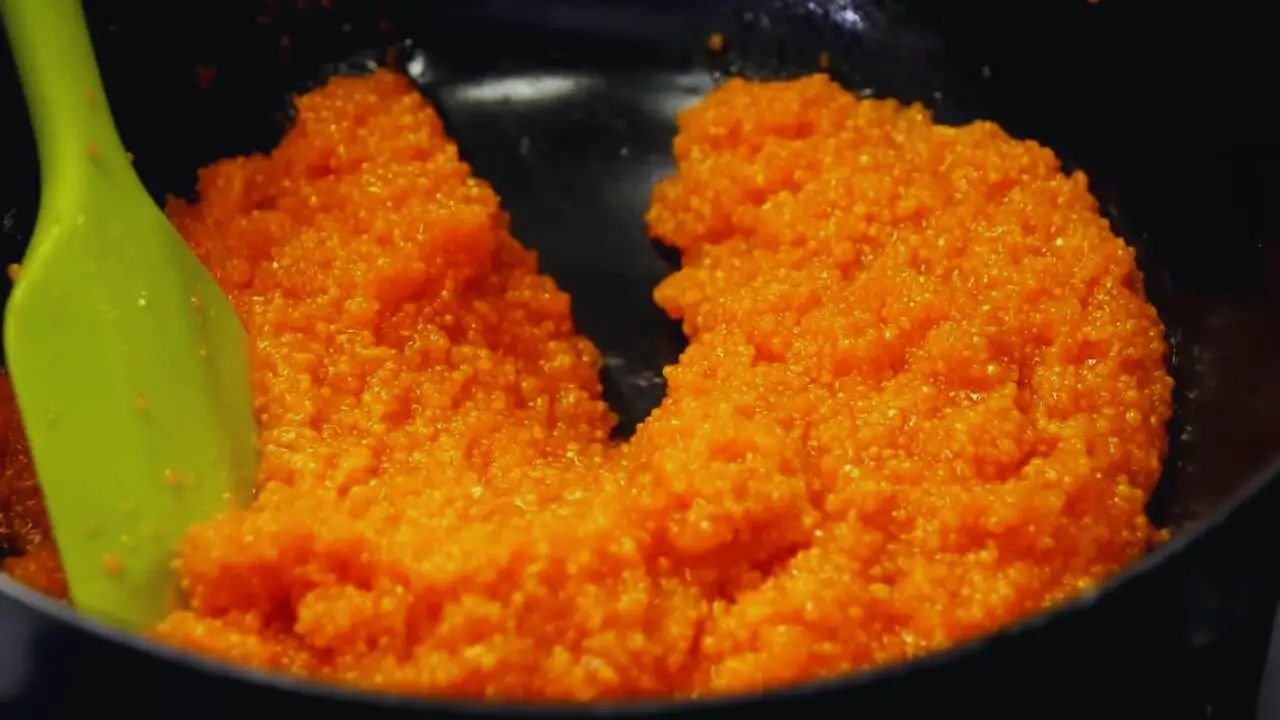
Step 10: Switch off the flame and transfer the mixture quickly onto a large plate and spread it nicely as shown in the image below.
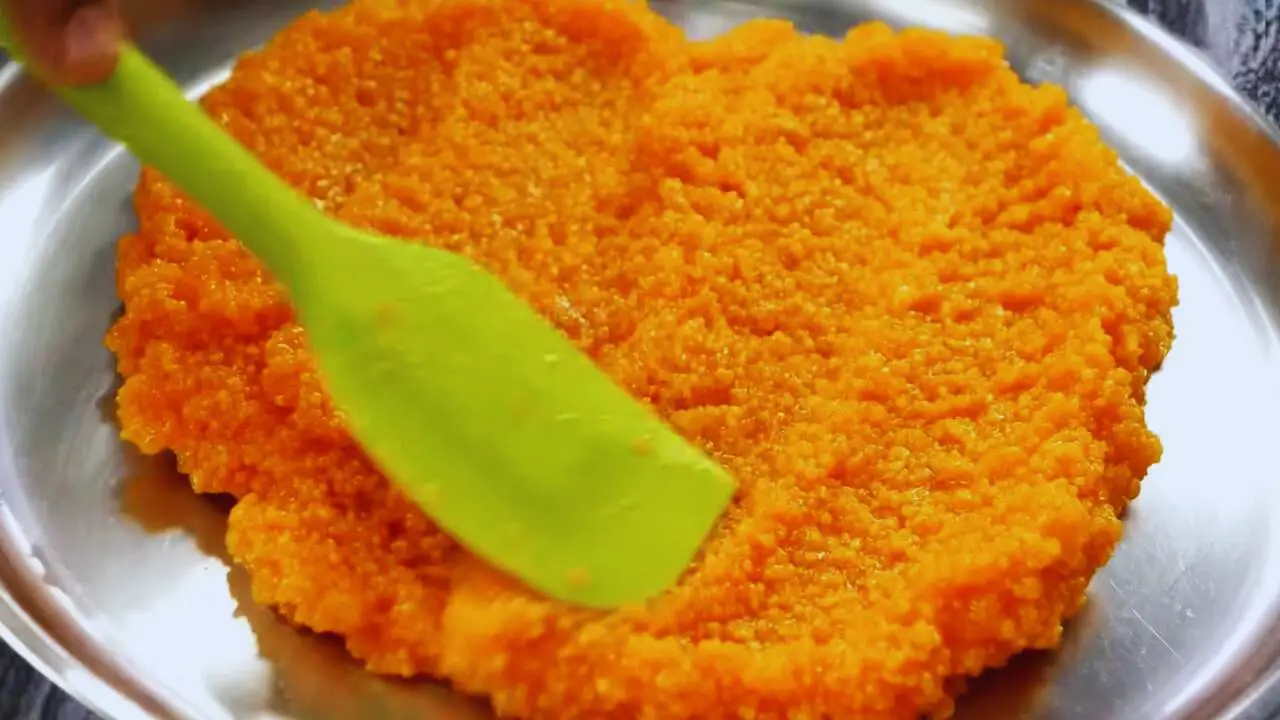
Step 11: Now, add 1 tbsp of magaz (melon seeds) to it and let it cool.
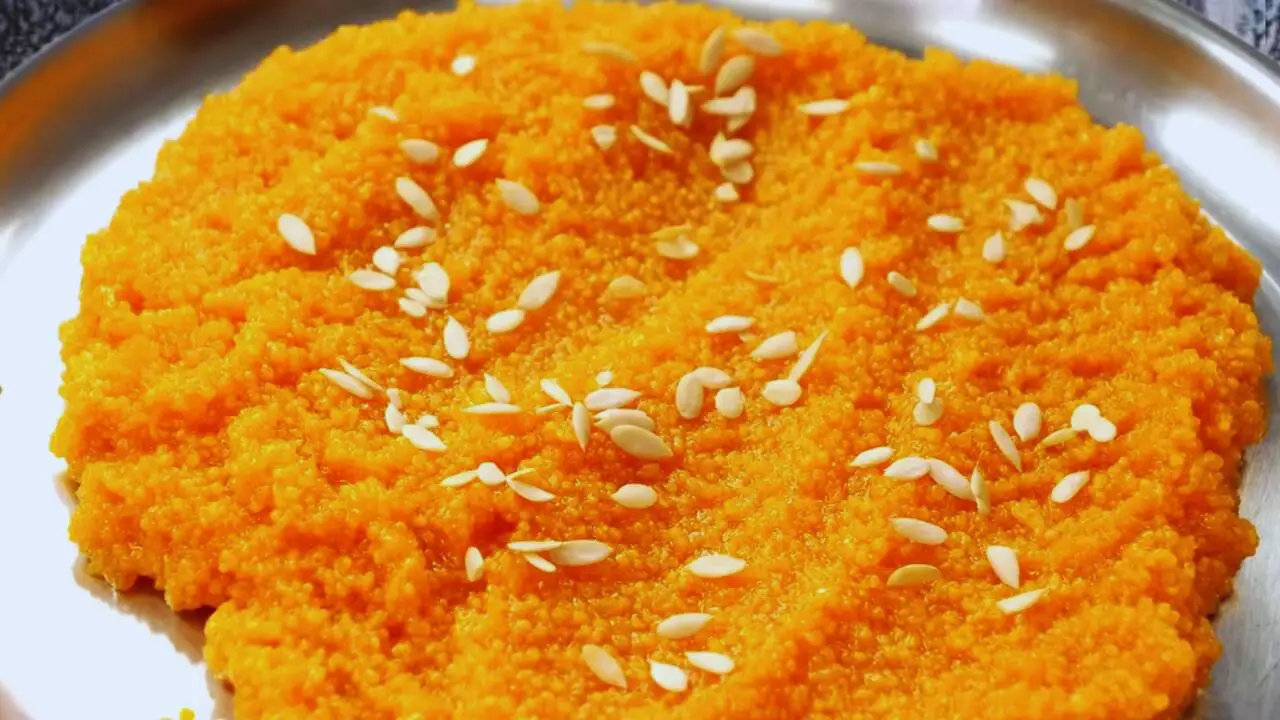
(Pro tip: Do not rush the cooling process. It will take anywhere around one and a half to two hours to cool down completely, which is necessary for proper binding).
Step 12: After 2 hours, grease your hand with a little bit of ghee and start making the laddus.
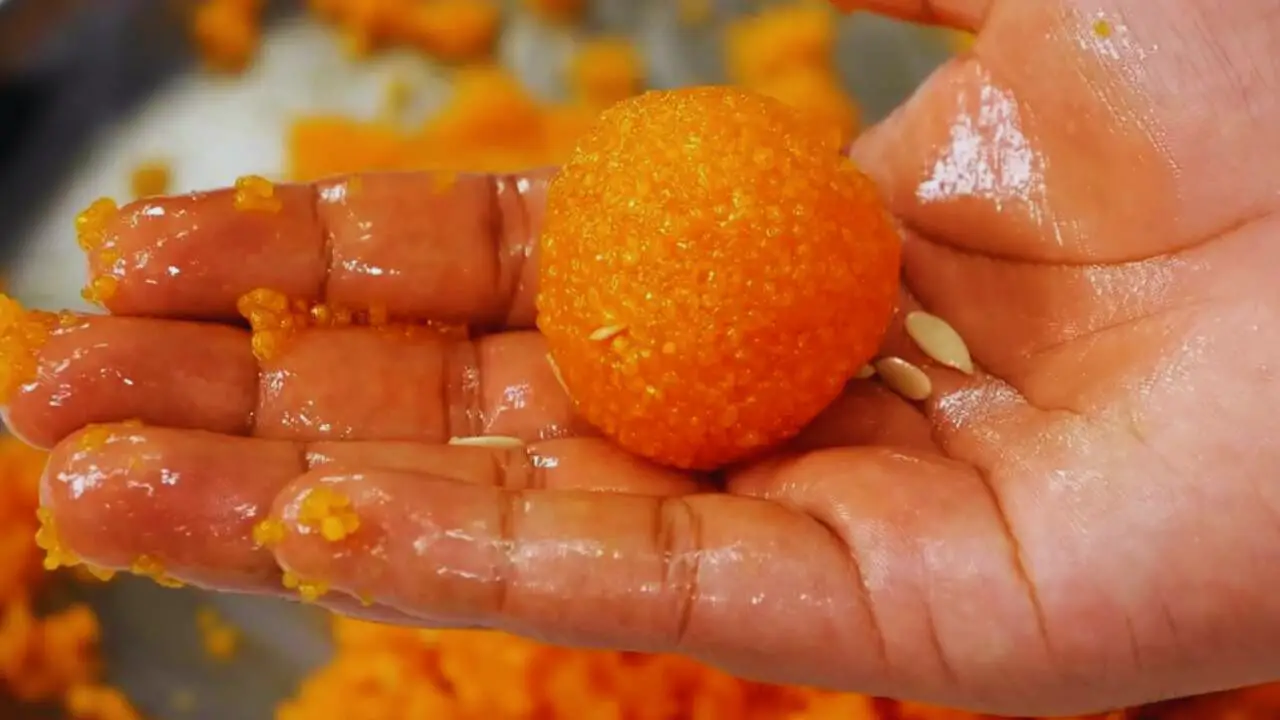
(Pro tip: If you have fried the boondis in cooking oil instead of ghee, add 2 tbsp of ghee at this point and then make the laddus).
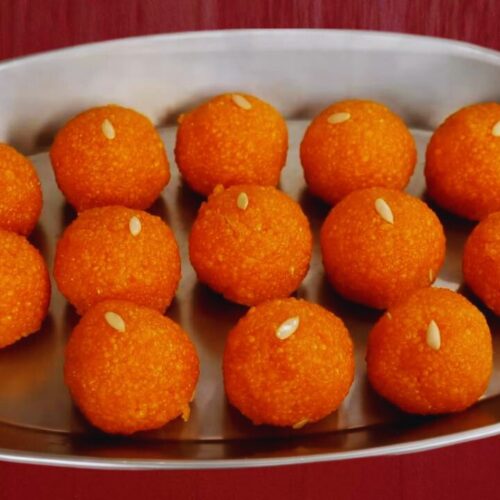
Step 13: Your sweet and tasty homemade motichur ke laddu is ready. Serve them on a plate and enjoy.

Recipe Card
Motichur Laddu
Ingredients
To make the boondi (Moti):
- 1 cup besan gram flour
- 2 drops food color kesar yellow, optional
- 1 cup water
- Ghee clarified butter as required to fry
For the sugar syrup (chashni):
- 1 cup sugar
- ½ cup water
- 2 drops food color kesar yellow
- ½ tsp rose water
- 1 tsp liquid glucose or 2 tbsp honey
- 1 tbsp magaz melon seeds
Instructions
- Take 1 cup of besan (gram flour) in a mixing bowl and add 2 drops of food color (kesar yellow). Mix them. (Pro tip: Do not use Bombay besan or any fine besan to make motichur laddu. The moti or boondi will not be of uniform shape).
- Then, add water gradually and mix it nicely to make a smooth and free flowing paste. (Pro tip: If the besan paste is not free flowing, the boondis will not be round and of uniform shape).
- Now, heat an adequate amount of ghee (clarified butter) in a deep-bottom kadai to fry the boondi. It should be half filled with ghee. Heat it on a high flame. (Pro tip: It is easier to make boondi in a deep-bottom kadai than a frying pan).
- In the meantime, make a platform to tap the skimmer or perforated ladle (jhara) ensuring a gap of at least 3 to 4 inches between the oil and the ladle. (Pro tip: For easy and safe tapping and to ensure that there is a gap of at least 3 to 4 inches between the oil and the perforated ladle, use a steel container larger in height than the kadai. You may cover it with a towel if you do not like the continuous sound of metal while tapping).
- Now, take a clean jhara and place it on the platform so that the ladle is on top of the hot ghee. Position the platform perfectly.
- Put a little bit of the besan mixture (about 1 to 1.5 ladles) and start tapping immediately. The boondis will not take time to fry. When the foam subsides, remove them and put them on a large plate as shown in the image below. Repeat the process to fry the entire besan mixture. Spread them and keep them aside to cool down. (Pro tip: Fry boondis in small batches for uniform shape. Also, clean the skimmer inside out every time to ensure perfect round shape. It may be difficult for you alone to put the besan mixture and tap and clean the ladle at the same time. Take help from another person if required. Do not put any wire net or tissue paper on the plate. Do not worry if a little bit of ghee comes with the boondis. It will enhance the taste and flavor of the laddus).
- In the meantime, take 1 cup of sugar and ½ cup of water in a separate kadai. Add 2 drops of food color (kesar yellow), ½ tsp of rose water, and 1 tsp of liquid glucose to it. Stir it continuously and heat it on a medium flame until it starts boiling and the sugar melts. (Pro tip: The transparent liquid glucose promotes binding and prevents the sugar syrup from crystallizing. If you do not have liquid glucose, you can use honey instead, but not now).
- When the sugar melts, switch off the flame of your gas stove and put all the boondis quickly in it and start stirring.
- Now, switch on the flame and stir continuously until the sugar syrup is completely absorbed by the boondis. At this stage, add 2 tbsp of honey to it and mix it nicely.
- Switch off the flame and transfer the mixture quickly on a large plate and spread it nicely as shown in the image below.
- Now, add 1 tbsp of magaz (melon seeds) to it and let it cool. (Pro tip: Do not rush the cooling process. It will take anywhere around one and a half to two hours to cool down completely, which is necessary for proper binding).
- After 2 hours, grease your hand with a little bit of ghee and start making the laddus. (Pro tip: If you have fried the boondis in cooking oil instead of ghee, add 2 tbsp of ghee at this point and then make the laddus).
- Your sweet and tasty homemade motichur ke laddu is ready. Serve them on a plate and enjoy.