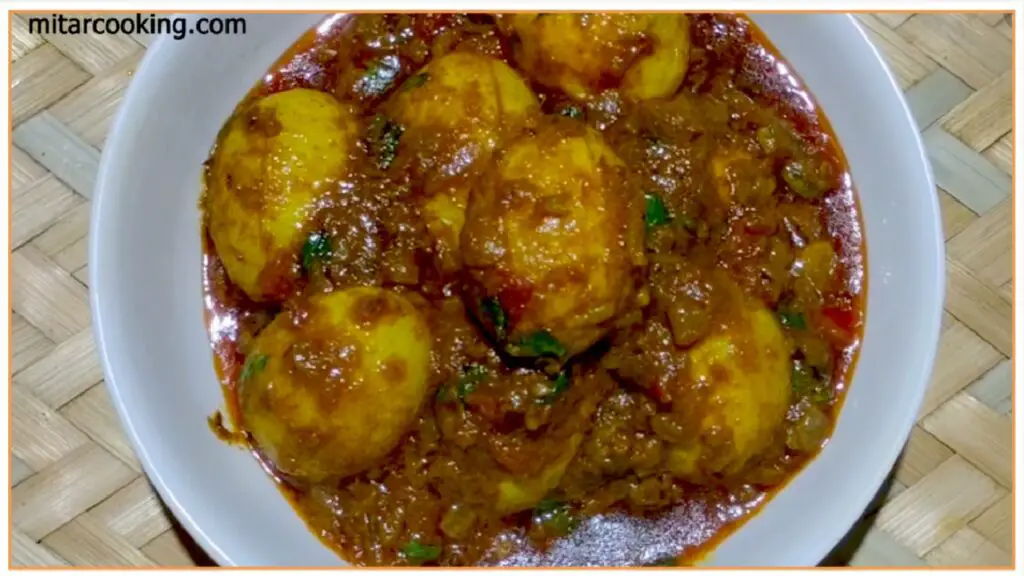
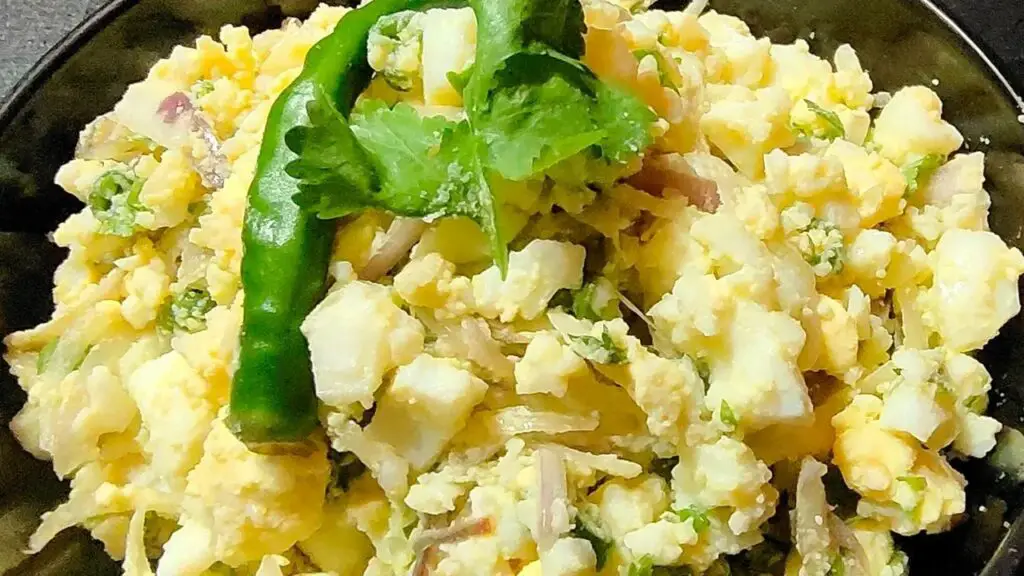
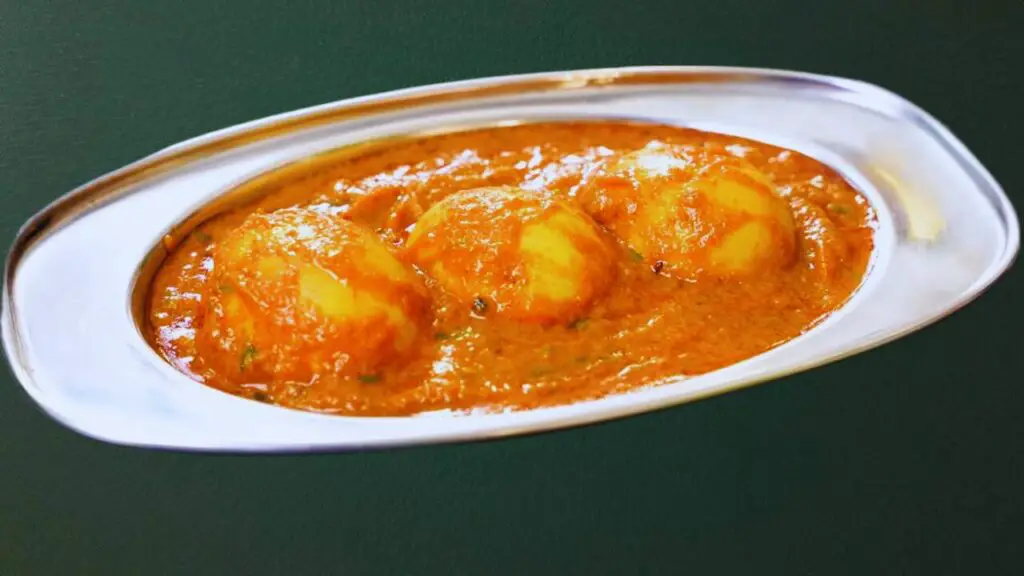
There is this particular smell that takes over my kitchen whenever I am cooking this dish. The mustard oil goes into the pan and whole spices crackle right away; that fragrance tells me this batch is going to come out just right. This Punjabi egg curry recipe is the one I make more than any other curry and I have tweaked it here and there over the years until the gravy finally lands on that perfect, clingy texture that my family loves. It has that classic Dhaba-style bold punch, deep red color, tangy layers, garam masala that sits in the background but makes everything feel complete. The heat is perfectly balanced and does not overpower the eggs.
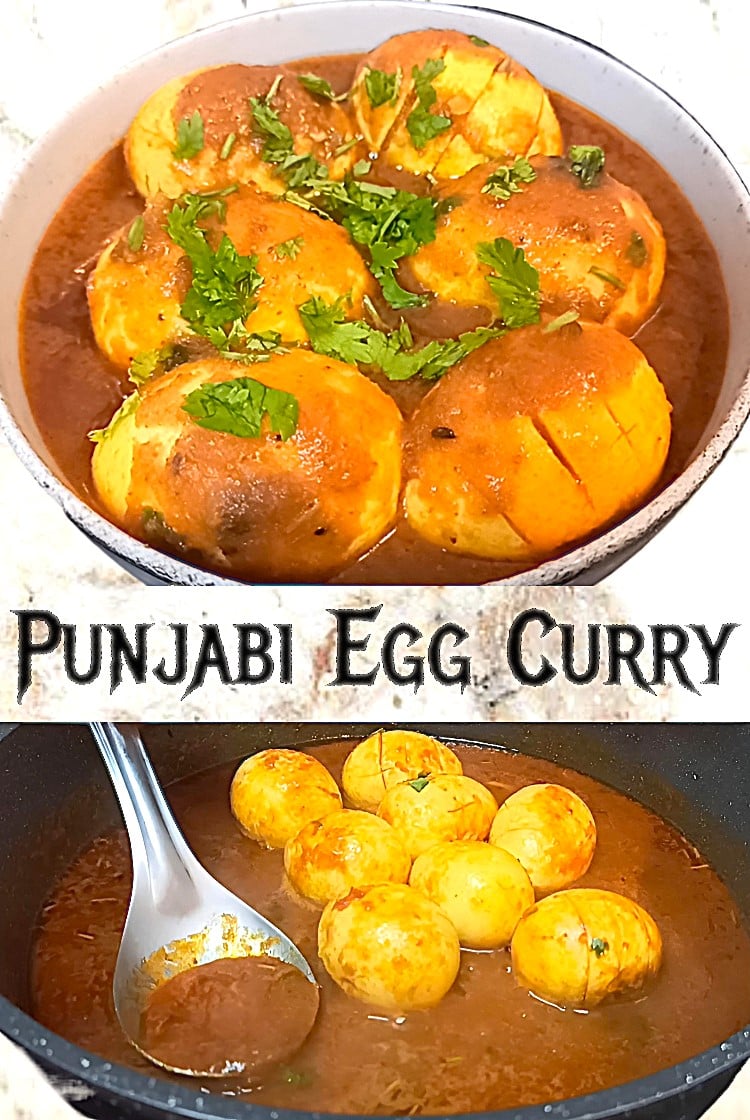
Recipe Snapshot
- This egg curry is a Punjabi weeknight staple, rich and deeply spiced but does not need to make it too elaborate.
- The flavor is a balance of tangy tomatoes, warm garam masala, sharp and pungent mustard oil, and just enough heat to make you sweat a little. Honestly the gravy tastes even better the next day.
- I personally like serving this with plain steamed rice, fresh chapatis or hot phulkas, with sliced onions and lemon on the side.
- From preparation and boiling the eggs to the final simmer, this whole curry takes me close to 45 minutes.
- It is similar to Kerala style egg curry, egg masala, and dim kosha, though the spicing here is heavier.
The Ingredients:
To marinate the eggs:
- 8 pieces eggs (boiled, peeled)
- Salt (a pinch)
- Kashmiri red chili powder (a pinch)
- Turmeric powder (a pinch)
To fry the eggs and make the onion masala paste:
- 1 tbsp mustard oil
- 1 tsp cumin seeds
- 4 pieces green cardamom
- 1 piece cinnamon stick (1 inch in size)
- 1 piece bay leaf
- 4 pieces cloves
- 2 pieces onions (medium size, finely sliced)
- 1 piece ginger (1 inch in size, roughly chopped)
- 8 pieces garlic (peeled, whole cloves)
To make the egg curry:
- 1 tbsp mustard oil
- 2 cups water
- 2 pieces tomatoes (medium size, pureed or very finely chopped)
- 1 tsp salt
- 2 tsp Kashmiri red chili powder
- 2 tsp coriander powder
- 1 tsp cumin powder
- 1 tsp garam masala powder
- ¼ tsp turmeric powder
- Coriander leaves (a few, finely chopped)
For garnishing:
- Coriander leaves (a few, finely chopped)
How to Make Punjabi Egg Curry? (Step by Step Guide with Photos)
Step 1: Take 8 boiled eggs. Peel them and make slits in them. Mix a pinch of salt, Kashmiri red chili powder, and turmeric powder to the eggs.
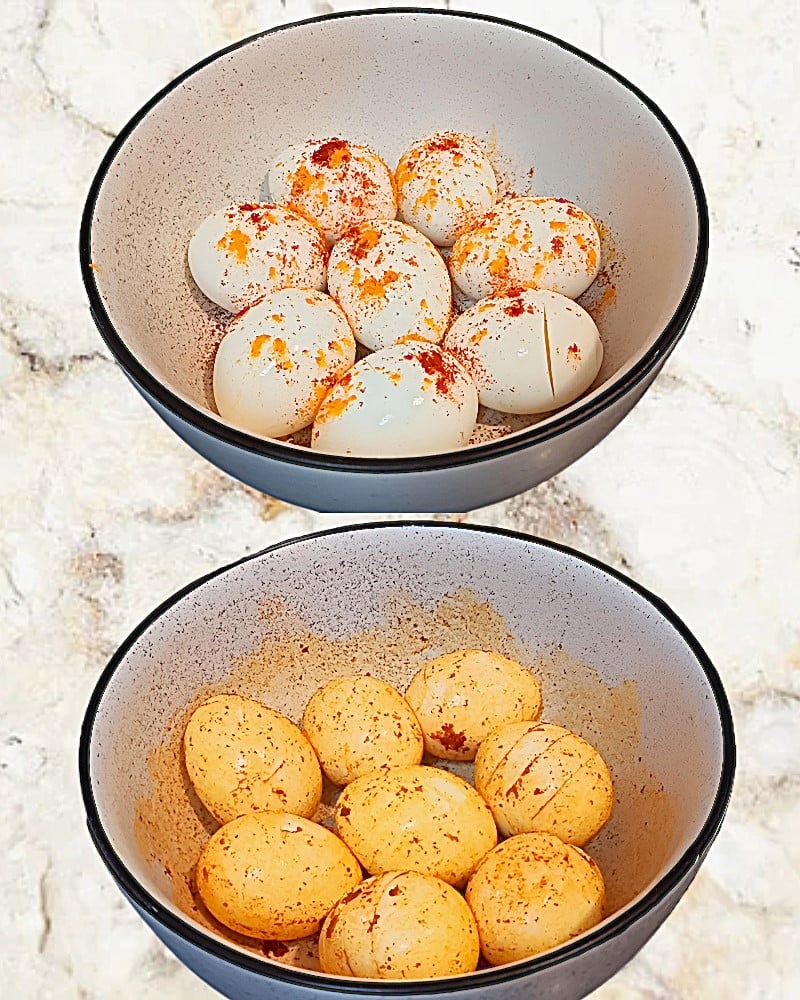
(Pro tip: Do not skip the slits, even though it’s tempting to save time. I make 3 to 4 shallow cuts on each egg as that lets the masala seep into the egg and do not taste like plain boiled egg on the inside.)
Step 2: Heat 1 tbsp of mustard oil in a pan on a medium flame. Put the eggs when hot. Fry them for 1 to 2 minutes until slightly golden. Remove them on a plate when done. Keep it aside.
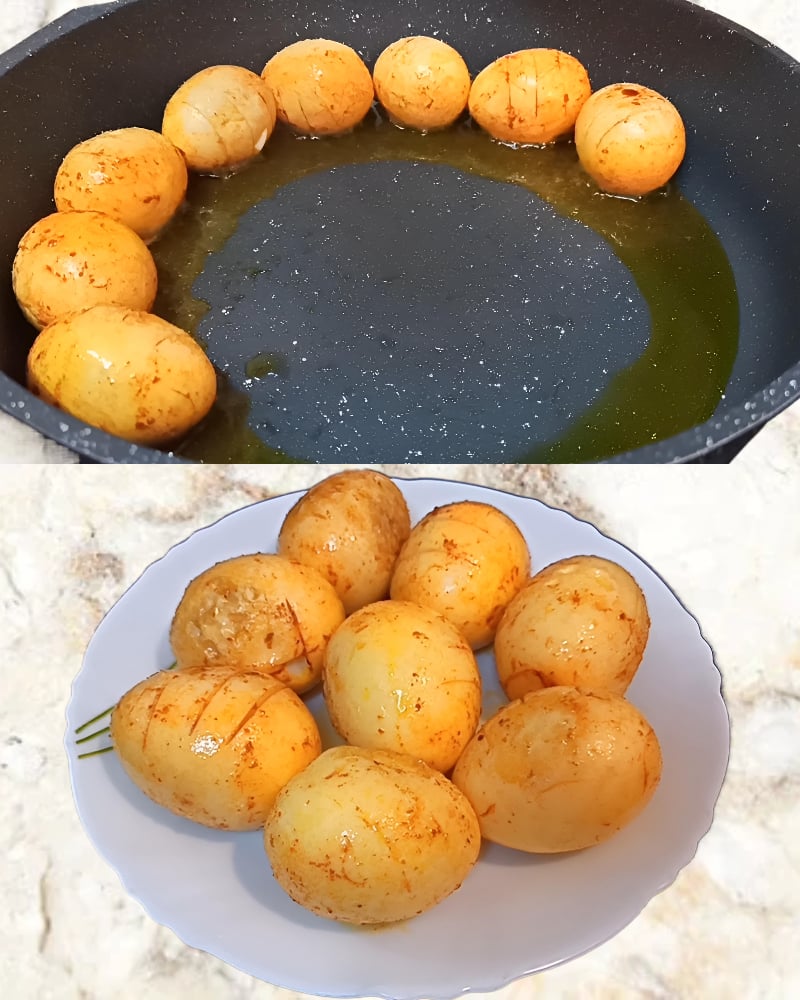
(Pro tip: Mustard oil spits a lot once the eggs go in, especially with wet or slightly damp eggs, so I keep a lid handy to shield the pan halfway through.)
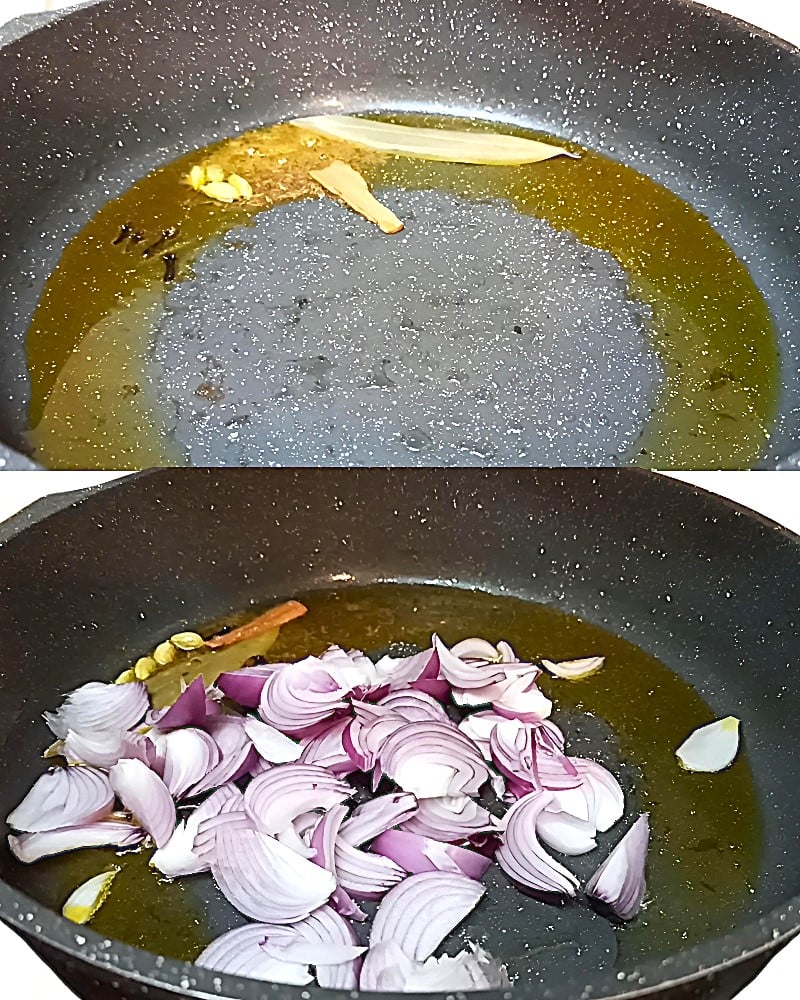
Step 3: In the remaining oil, sauté 1 tsp of cumin seeds, 4 pieces of green cardamom, 1 piece of cinnamon stick (1 inch in size), 1 piece of bay leaf and 4 pieces of cloves for a few seconds. Then put in 2 pieces of medium-sized, finely sliced onions. Fry for another 2 minutes until the onions change their color lightly.
Step 4: Now, add 1 piece of ginger (1 inch in size, roughly chopped) and 8 pieces of garlic (peeled, whole cloves). Sauté for another minute or so until the onions become translucent.
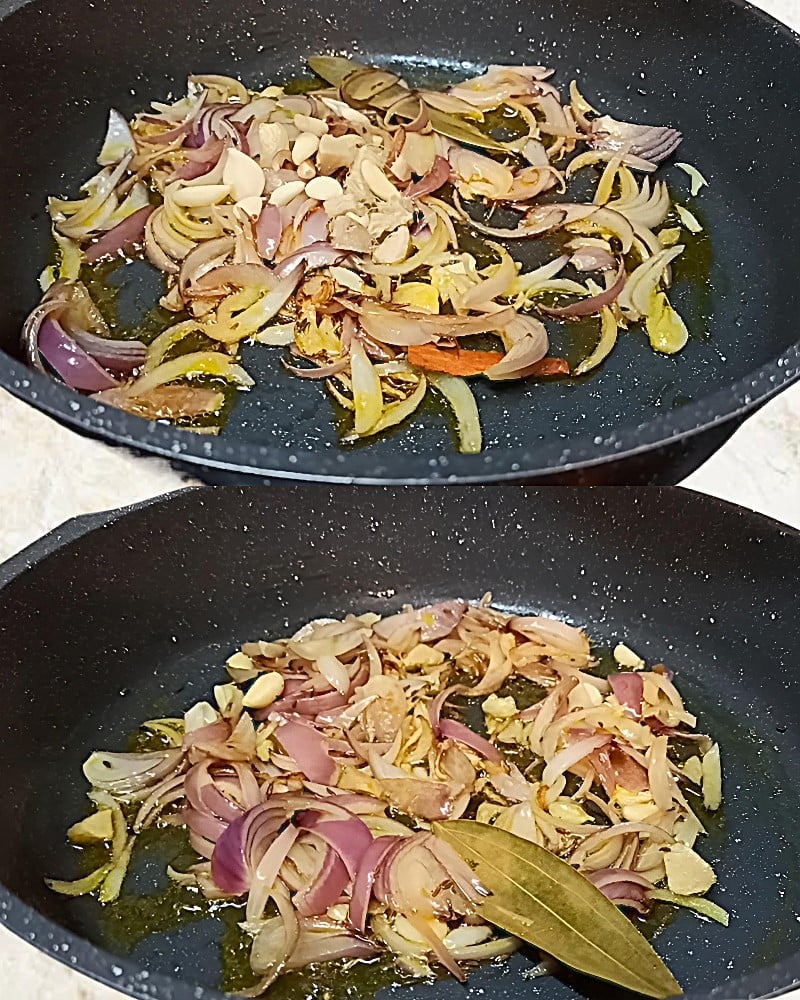
Step 5: Cover the lid and cook for another 4 to 5 minutes on a low flame until everything is nicely cooked. Check the doneness.
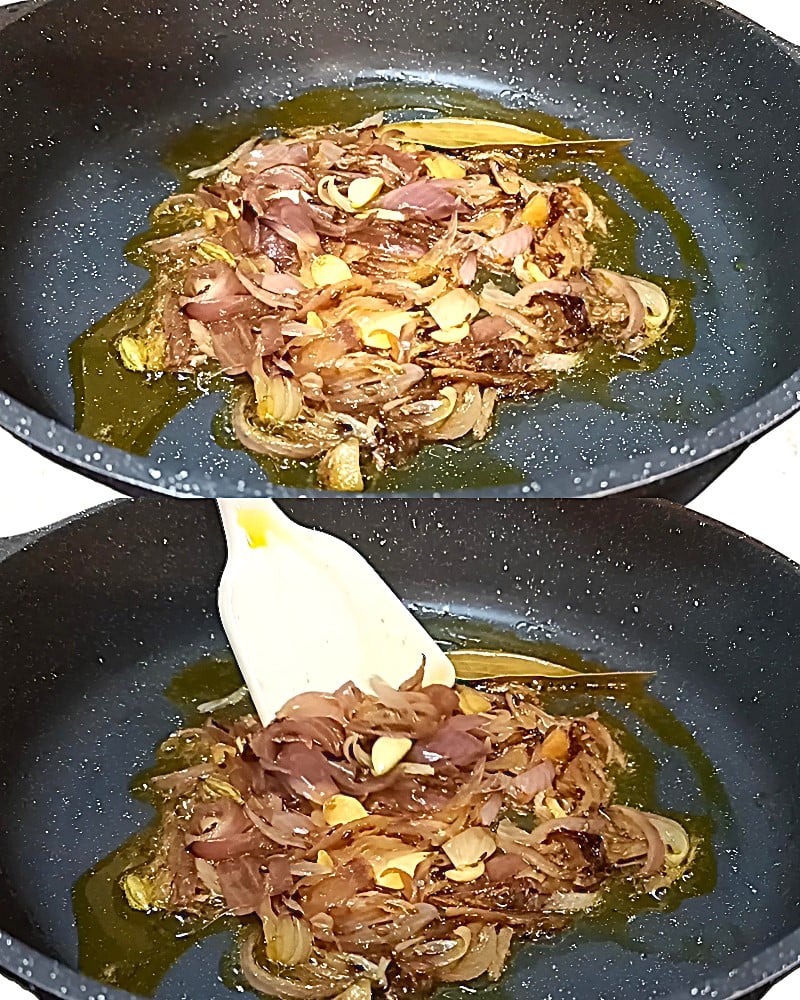
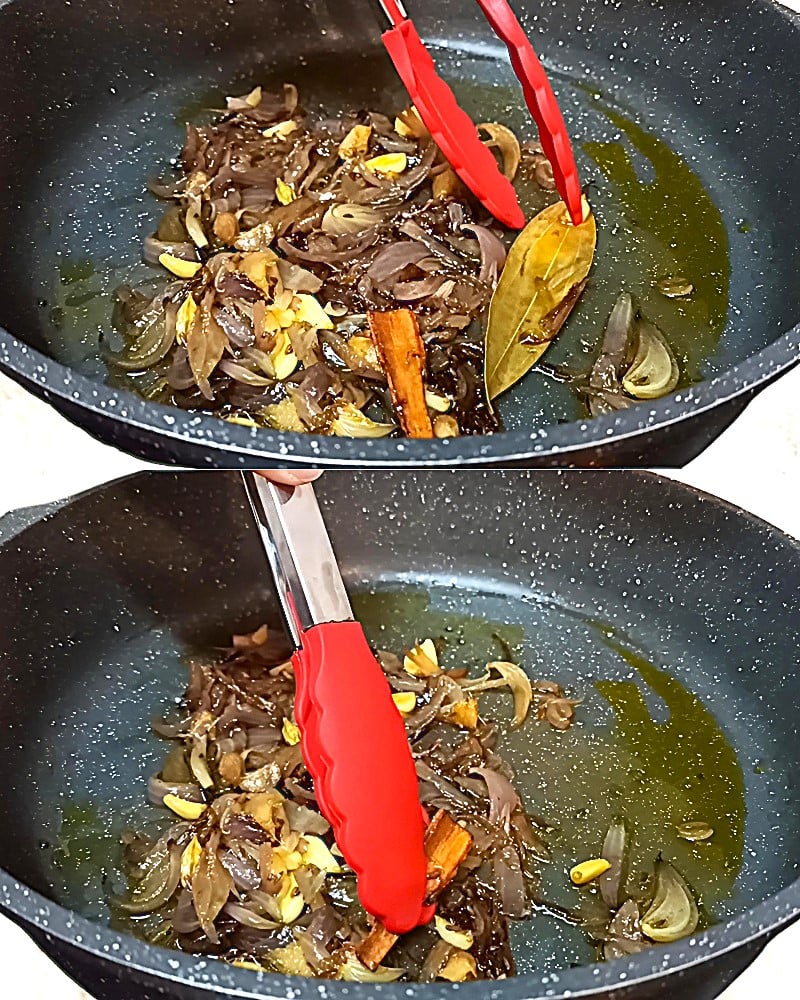
Step 6: Remove the bay leaf and the cinnamon stick. Allow it to cool.
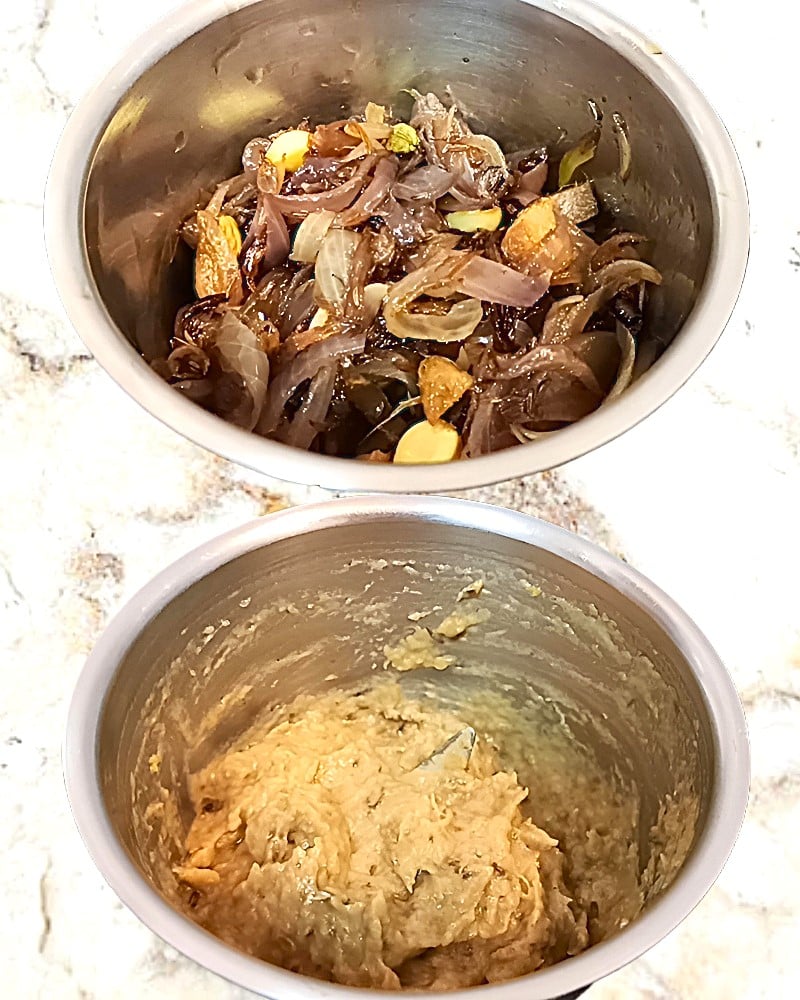
Step 7: Transfer it to a grinding jar. Grind it to a smooth paste.
Step 8: In the same pan, heat 1 tbsp of mustard oil again on a low flame. Add the ground onion masala paste. Add ¼ cup of water. Cook for 5 to 6 minutes until the oil separates.
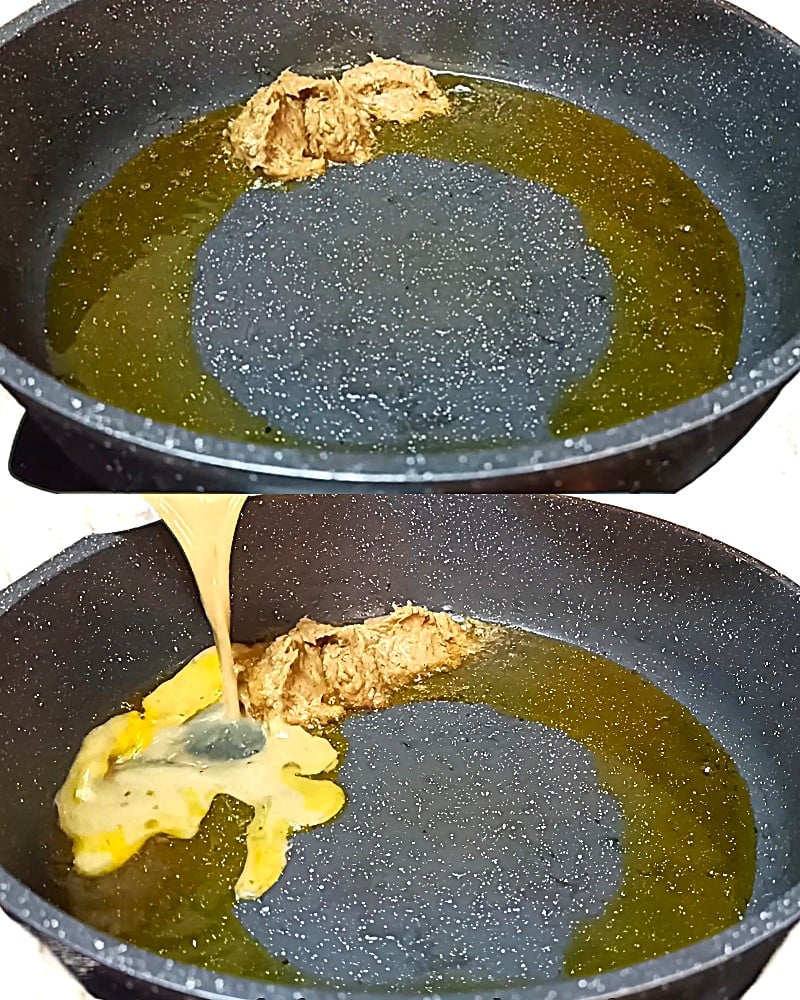
(Pro tip: I usually wash the grinder jar with water and add it. It prevents wasting the masala sticking to the sides of the grinder jar).
Step 9: Add the puree of 2 medium sized tomatoes. Again, cook for 5 to 6 minutes on a low flame until the oil separates. Now add 1 tsp of salt, 2 tsp of Kashmiri red chili powder, 2 tsp of coriander powder, 1 tsp of cumin powder, 1 tsp of garam masala powder, and ¼ tsp of turmeric powder. Mix nicely and cook further for a minute on a low flame.
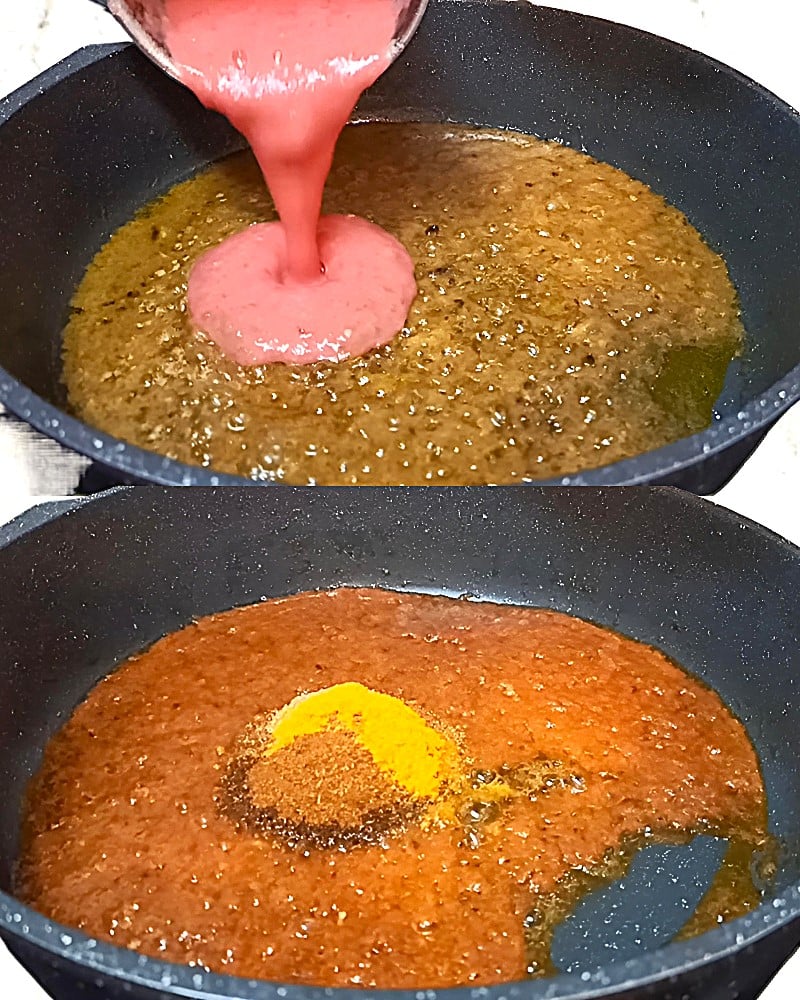
Step 10: Add ¼ cup of water. Cook for 4 to 5 minutes on a low flame until the oil separates. Then add 1.5 cups of water more. Bring it to a boil.
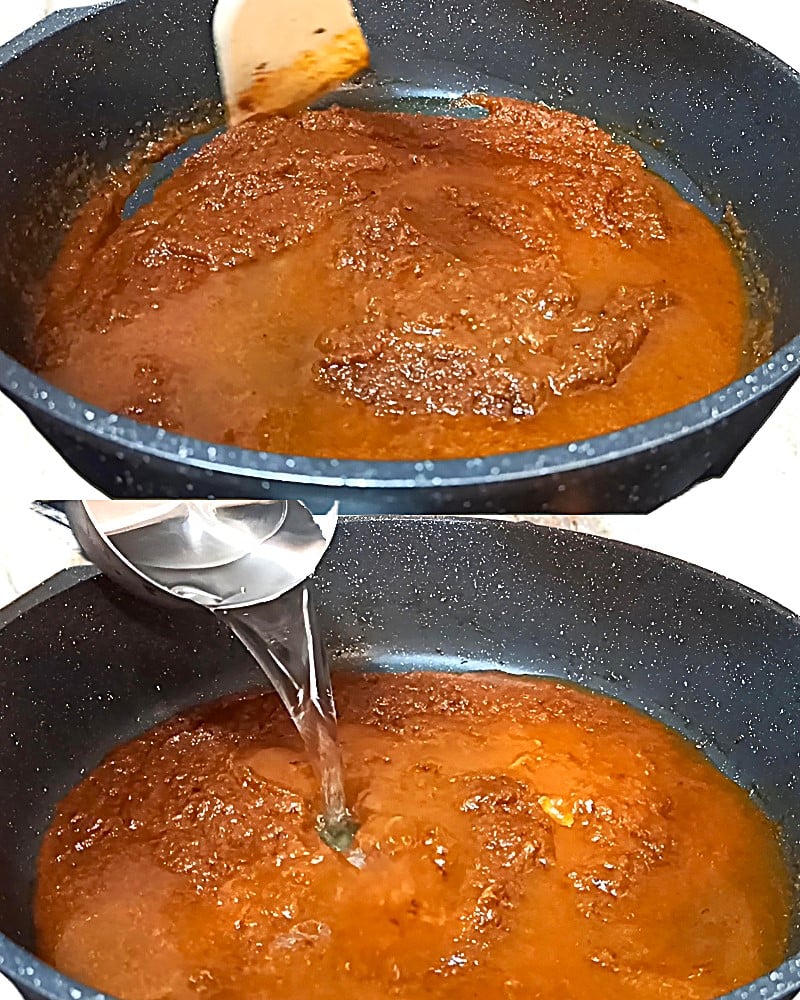
(Pro tip: I always add the water in two batches rather than all in at once. It lets the gravy come together properly instead of thinning out the masala before it sets.)
Step 11: Add the fried eggs. Cover and cook for 4 to 5 minutes on a low flame.
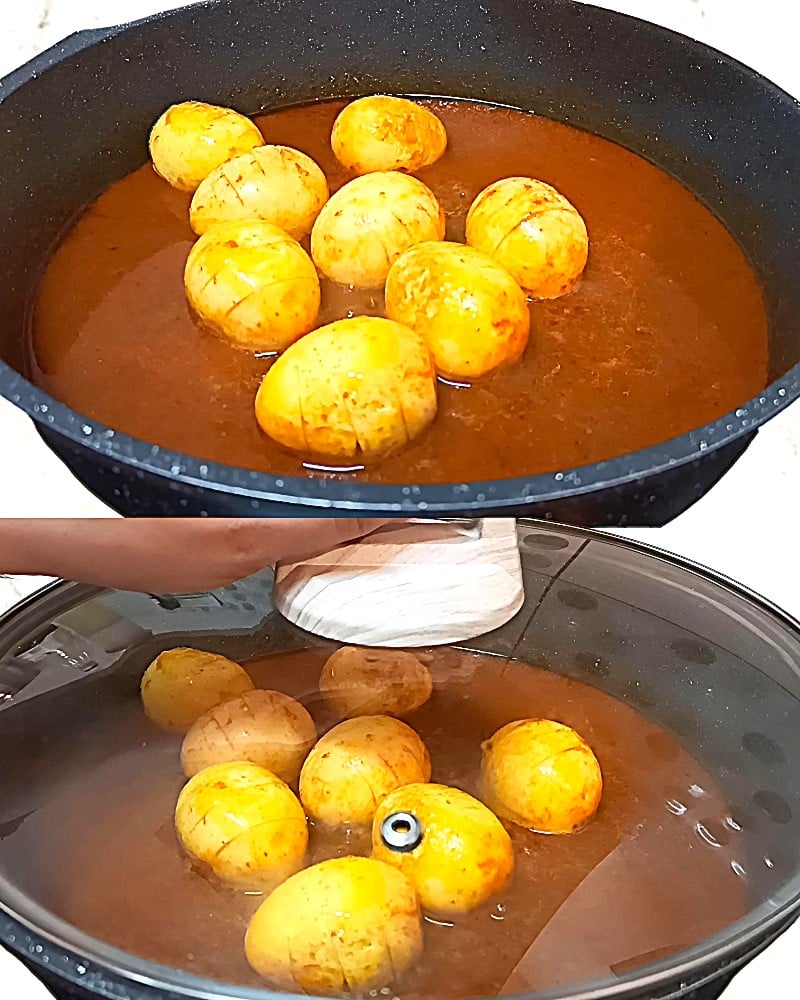
Step 12: Finally, add a few finely chopped coriander leaves and cook for another minute. Check the final consistency of the gravy.
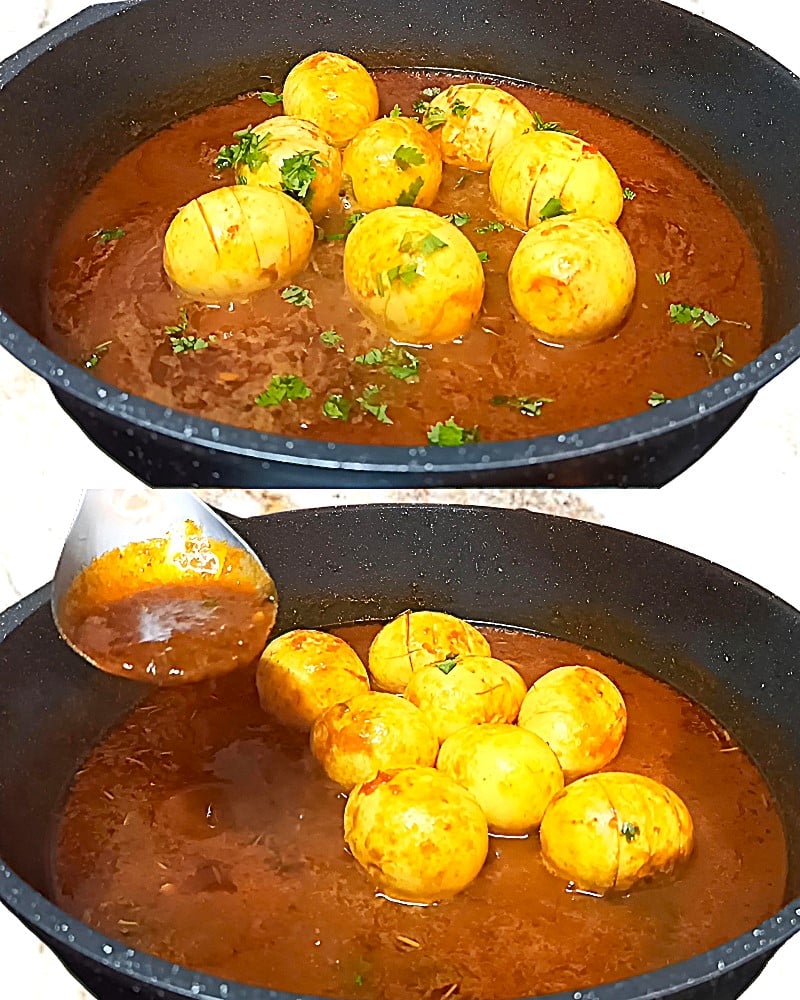
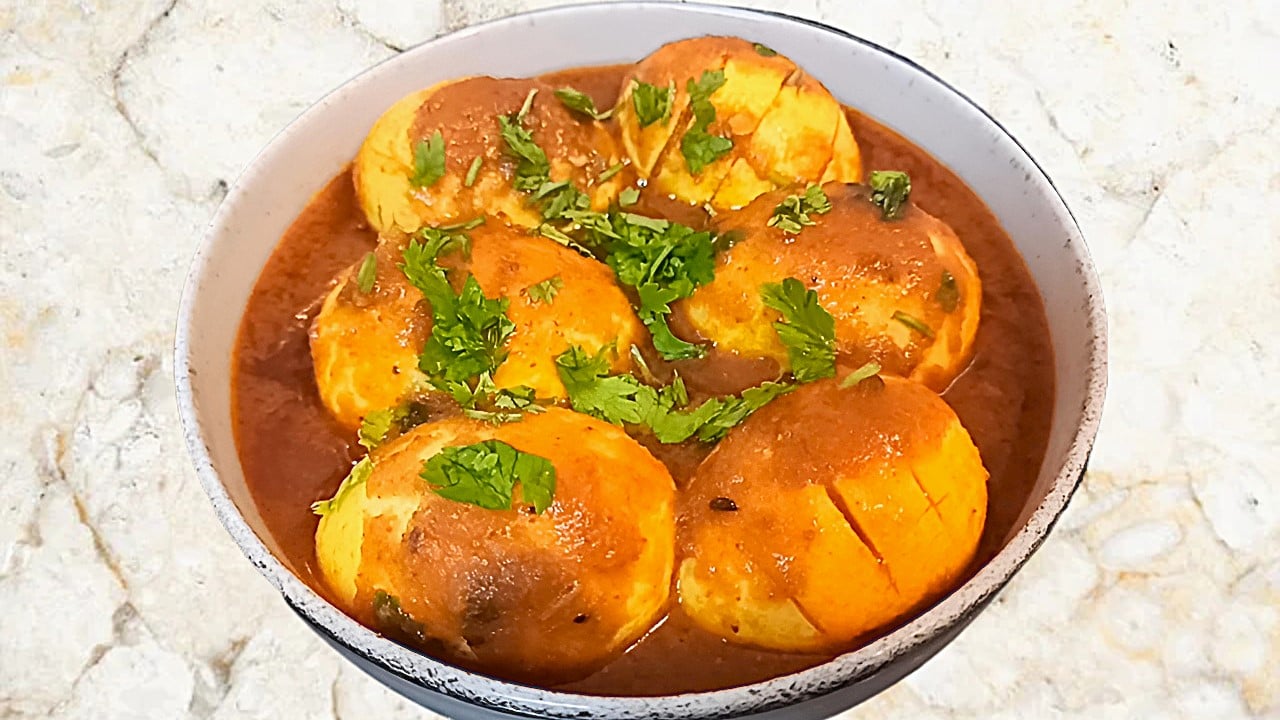
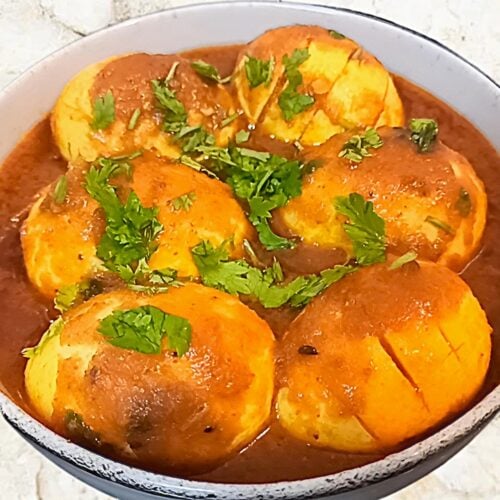
Step 13: Transfer it to a serving bowl, garnish it with a few more finely chopped coriander leaves and your tasty and spicy homemade Punjabi egg curry is ready to enjoy.
Being More Creative
- Sometimes I add boiled potato cubes along with the eggs to make a heartier Anda-aloo.
- When cooking for guests, I add a spoon of cream towards the end. It tones down the chili and adds more body to the gravy without altering the masala.
- I have also used ghee instead of mustard oil while making this for my children, as it is less pungent. They seem to like ghee’s flavor better than the mustard oil.
- In order to make it more Dhaba-style and add a smoky flavor, I sometimes do the dhungar – a drop or two of ghee is added to a small piece of hot coal in a little bowl and then covering it for a few mins.
- If I want a dry masala to have with rotis for lunch, I reduce the amount of water added in step 10, so that it thickens to a Sukha consistency.
- I sometimes add a bunch of Kasuri methi with the coriander leaves. It adds a nice slightly bitter note that goes well with the tomato sauce.
Punjabi Egg Curry FAQs & Quick Fixes
Q: My gravy came out watery; what did I mess up?
A: I’ve done it myself once by adding all the water at once in Step 10, instead of adding in batches. Also, if you rushed the onion-tomato paste in Step 8, it will retain some moisture.
Q: The onion paste in Step 7 won’t become smooth; why does it keep leaving bits?
A: This also happened to me once before when I undercooked the onions in Step 5. My fix is a small splash of water and then another grind; it will end up silky.
Q: The curry feels flat, even after I put all the spices in Step 9. Why?
A: When I too faced such situations before, I used to blame the spice amounts, but then I realized my masala wasn’t cooked long enough. Now I just wait until the raw smell is gone, and the aroma of the garam masala actually fills the kitchen.
Q: My kids say it’s too spicy, can I adjust it after Step 9?
A: I run into that often, because my kids can’t handle too much heat. I mix in a spoon of curd or even a bit more pureed tomato during Step 9; it cuts the kick without making the base watery.
Q: In Step 8 or 10 the oil never separates right. What am I missing?
A: I made this error for years; I kept the flame too high. Now I keep it low, and I let it sit for the full five to six minutes; the oil separates on its own nicely now.
Q: Some of my eggs split open in Step 11. Why?
A: I learned to place mine gently, and once they’re in, I don’t do vigorous stirring, because that’s what seems to cause the problem.
Q: The gravy tastes too sour from the tomatoes I used in Step 9. Can I rectify it?
A: My usual rescue move would be a tiny pinch of sugar while it simmers in Step 10. it levels the tang and nobody at the table ever complains. Also, I would deal with this initially by using very ripe tomatoes.
Recipe Card
Punjabi Egg Curry (Dhaba Style)
Ingredients
To marinate the eggs:
- 8 pieces eggs boiled, peeled
- Salt a pinch
- Kashmiri red chili powder a pinch
- Turmeric powder a pinch
To fry the eggs and make the onion masala paste:
- 1 tbsp mustard oil
- 1 tsp cumin seeds
- 4 pieces green cardamom
- 1 piece cinnamon stick 1 inch in size
- 1 piece bay leaf
- 4 pieces cloves
- 2 pieces onions medium size, finely sliced
- 1 piece ginger 1 inch in size, roughly chopped
- 8 pieces garlic peeled, whole cloves
To make the egg curry:
- 1 tbsp mustard oil
- 2 cups water
- 2 pieces tomatoes medium size, pureed or very finely chopped
- 1 tsp salt
- 2 tsp Kashmiri red chili powder
- 2 tsp coriander powder
- 1 tsp cumin powder
- 1 tsp garam masala powder
- ¼ tsp turmeric powder
- Coriander leaves a few, finely chopped
For garnishing:
- Coriander leaves a few, finely chopped
Instructions
- Take 8 boiled eggs. Peel them and make slits in them. Mix a pinch of salt, Kashmiri red chili powder, and turmeric powder to the eggs. (Pro tip: Do not skip the slits, even though it's tempting to save time. I make 3 to 4 shallow cuts on each egg as that lets the masala seep into the egg and do not taste like plain boiled egg on the inside.)
- Heat 1 tbsp of mustard oil in a pan on a medium flame. Put the eggs when hot. Fry them for 1 to 2 minutes until slightly golden. Remove them on a plate when done. Keep it aside. (Pro tip: Mustard oil spits a lot once the eggs go in, especially with wet or slightly damp eggs, so I keep a lid handy to shield the pan halfway through.)
- In the remaining oil, sauté 1 tsp of cumin seeds, 4 pieces of green cardamom, 1 piece of cinnamon stick (1 inch in size), 1 piece of bay leaf and 4 pieces of cloves for a few seconds. Then put in 2 pieces of medium-sized, finely sliced onions. Fry for another 2 minutes until the onions change their color lightly.
- Now, add 1 piece of ginger (1 inch in size, roughly chopped) and 8 pieces of garlic (peeled, whole cloves). Sauté for another minute or so until the onions become translucent.
- Cover the lid and cook for another 4 to 5 minutes on a low flame until everything is nicely cooked. Check the doneness.
- Remove the bay leaf and the cinnamon stick. Allow it to cool.
- Transfer it to a grinding jar. Grind it to a smooth paste.
- In the same pan, heat 1 tbsp of mustard oil again on a low flame. Add the ground onion masala paste. Add ¼ cup of water. Cook for 5 to 6 minutes until the oil separates. (Pro tip: I usually wash the grinder jar with water and add it. It prevents wasting the masala sticking to the sides of the grinder jar).
- Add the puree of 2 medium sized tomatoes. Again, cook for 5 to 6 minutes on a low flame until the oil separates. Now add 1 tsp of salt, 2 tsp of Kashmiri red chili powder, 2 tsp of coriander powder, 1 tsp of cumin powder, 1 tsp of garam masala powder, and ¼ tsp of turmeric powder. Mix nicely and cook further for a minute on a low flame.
- Add ¼ cup of water. Cook for 4 to 5 minutes on a low flame until the oil separates. Then add 1.5 cups of water more. Bring it to a boil. (Pro tip: I always add the water in two batches rather than all in at once. It lets the gravy come together properly instead of thinning out the masala before it sets.)
- Add the fried eggs. Cover and cook for 4 to 5 minutes on a low flame.
- Finally, add a few finely chopped coriander leaves and cook for another minute. Check the final consistency of the gravy.
- Transfer it to a serving bowl, garnish it with a few more finely chopped coriander leaves and your tasty and spicy homemade Punjabi egg curry is ready to enjoy.